What Your Office Says to Clients | Law Firm Office Design Toronto
The moment a client walks into your boardroom, they’re already forming an opinion about your firm. Not about your track record or your billings — about whether this is a place that handles serious matters seriously. Office design is an argument. The question is whether yours is making the one you intend.
Prestige Is Functional, Not Decorative
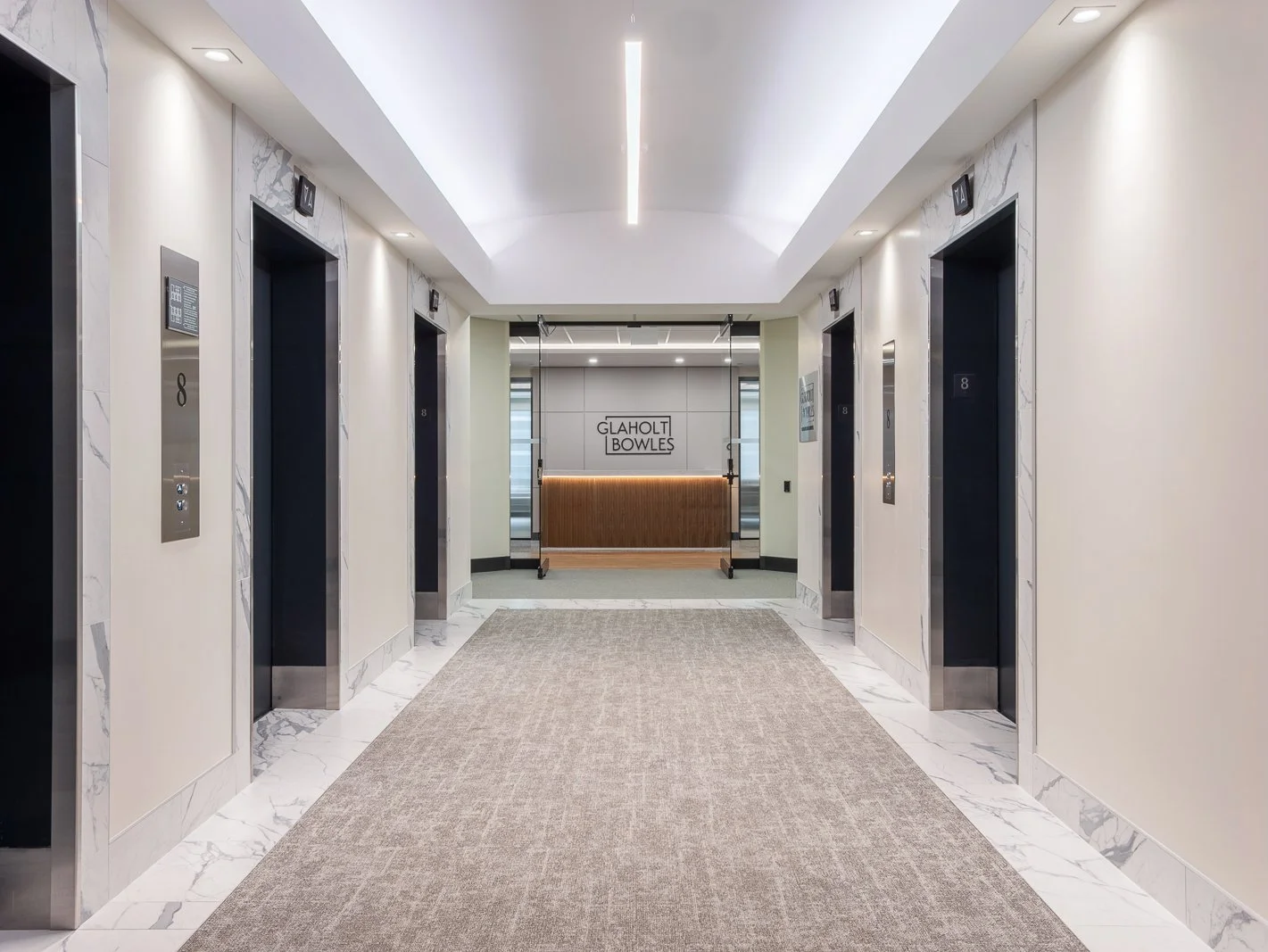
There’s a meaningful difference between a space that’s expensive and a space that’s credibly designed. The first tells clients you bill a lot. The second tells them you’ve built an institution. The distinction matters most at the points of client contact: reception areas, boardrooms, and the corridors that connect them.
CBRE’s 2024 Canadian Office Outlook reported that demand for Class A space among professional services tenants in Toronto’s Financial Core grew by 11% year-over-year, even as overall downtown vacancy remained elevated above 18%. The firms moving into and renovating quality space aren’t doing it arbitrarily. They’re doing it because they understand what it communicates to the clients they’re competing for.
The design details that signal quality aren’t always the most visible ones. They’re in the acoustic performance of a boardroom door, the weight of a surface material, the way a corridor leads the eye. These things register without being catalogued. A client who feels comfortable and confident in your space arrives at a meeting in a different state than one who doesn’t.
Confidentiality Is a Design Problem
A law firm’s office is a controlled environment for sensitive information. Walk-through sightlines into associate workspaces, glass-walled conference rooms with inadequate acoustic treatment, open areas adjacent to client-meeting zones — these aren’t just aesthetic preferences. They’re liability questions.
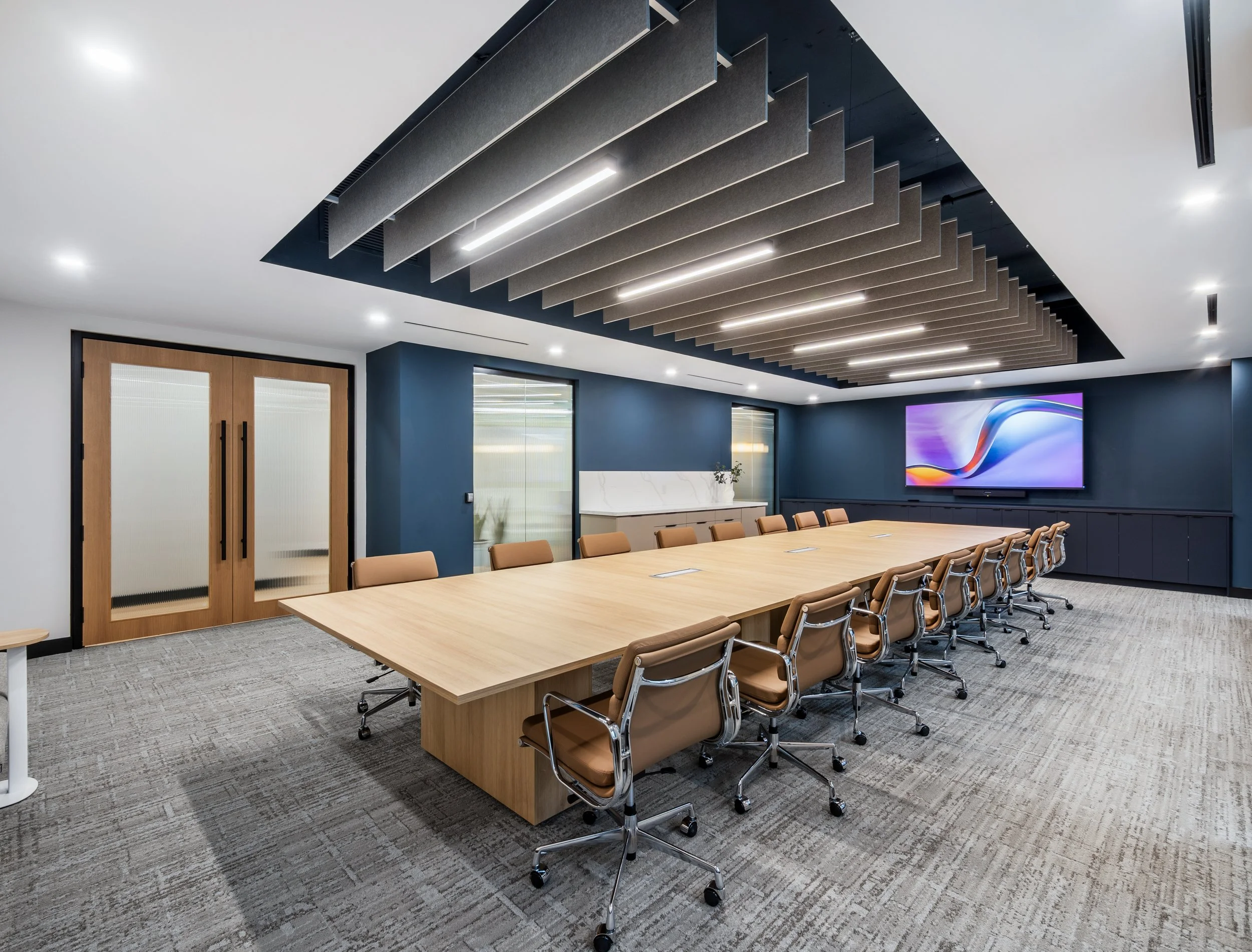
Good law firm design takes acoustic privacy seriously at the specification level: wall assembly details, door hardware, HVAC placement to avoid sound transfer through mechanical cavities, and room-within-a-room configurations for matters requiring additional discretion. It takes visual privacy seriously too. We designed around these requirements before aesthetics on recent projects with GTA law firms including DWF Global Legal Business and Glaholt Bowles LLP. The acoustic and visual privacy architecture wasn’t applied after the fact — it was the organizing logic the rest of the design was built around.
The Partner Alignment Challenge
Law firm fit-outs face a challenge most interior projects don’t: you’re designing for a partnership, not a single decision-maker. Multiple equity partners, strong individual preferences, and a collective expectation that the finished space reflects the firm. The most common mistake is treating this as a design problem when it’s actually a process problem. Alignment has to happen before design begins — design can’t resolve misaligned expectations, it amplifies them.
According to the American Bar Association’s 2023 Legal Technology Survey, law firms that reported significant delays in office build-outs cited stakeholder misalignment as the primary cause in 61% of cases — ahead of both contractor issues and supply chain disruptions. We spend meaningful time understanding how decisions are made, where consensus exists, and where the difficult conversations need to happen first.
The Execution Standard Your Clients Will Notice
Law clients are, by nature, detail-oriented. A boardroom door that doesn’t hang flush, a transition strip that lifts at the corner, a ceiling tile that’s slightly off-plane — these things register. They may not be mentioned, but they arrive in precisely the context you don’t want them to. The argument for design-build in a law firm fit-out is partly about this: when the same team that designs a space also builds it, the intent of the design is understood at the execution level.
Your Office Is Part of Your Argument
The best law firm offices in Toronto feel considered. Every material choice, room configuration, and circulation decision reflects a level of intentionality that mirrors what clients are retaining you to bring to their matters. If your current space no longer reflects the firm you’ve become — or the firm you’re positioning to become — it may be time to think carefully about what a new environment could say on your behalf.